Last updated: November 21, 2026
Affiliate disclosure: Some links on this page may be affiliate links. If you sign up through them, we may earn a commission at no extra cost to you. This never changes our recommendations.
Health disclaimer: This article is for general information only and is not medical advice. Talk to your doctor before starting a weight loss program or a new exercise routine, especially if you have heart disease, high blood pressure, diabetes, joint problems or another health condition.
Most “best weight loss programs for men” lists are the same list you’d see for anyone, with a picture of a guy at the gym. That misses the point. Men tend to gain weight in specific ways (around the waist, through drinks and meals out, and as muscle quietly fades with age), and the best program is the one that fixes the specific habit that’s driving your weight.
So this guide works the other way around. First, find your weak spot. Then pick the program built for it.
The numbers every man should know
| 40 inches | The waist size above which men have a higher risk of heart disease and type 2 diabetes, according to the National Heart, Lung, and Blood Institute |
| About 150 calories | In one 12-ounce regular beer. Eight on a weekend adds about 1,200 calories |
| 37.9% | Share of men who ate fast food on a given day in a large CDC survey, most often at lunch |
| 35.2% | Share of men who met the guideline for muscle-strengthening activity in 2020, falling to 22.0% for men 65 and older |
| 27% | Share of participants who were men in randomized trials of lifestyle weight loss programs, according to a 2012 review. Most programs weren’t designed with men in mind |
Find your weak spot: a 5-question check
Answer honestly. Each “yes” points to a weak spot. If you have more than one, start with the one you think costs you the most.
- Waist: Is your waist 40 inches or more, or have you gone up a belt size in the last few years?
- Alcohol: Do you have more than a couple of drinks on most weekends, or a few drinks on most weeknights?
- Eating out: Do you eat lunch or dinner from a restaurant, drive-through or delivery app three or more times a week?
- Strength: Do you do muscle-strengthening exercise less than twice a week?
- Structure: Have you tried to lose weight before and lost track within a few weeks?
If you answered yes to question 5, read the research section first: what works for men is different from what most programs offer.
Weak spot 1: your waist
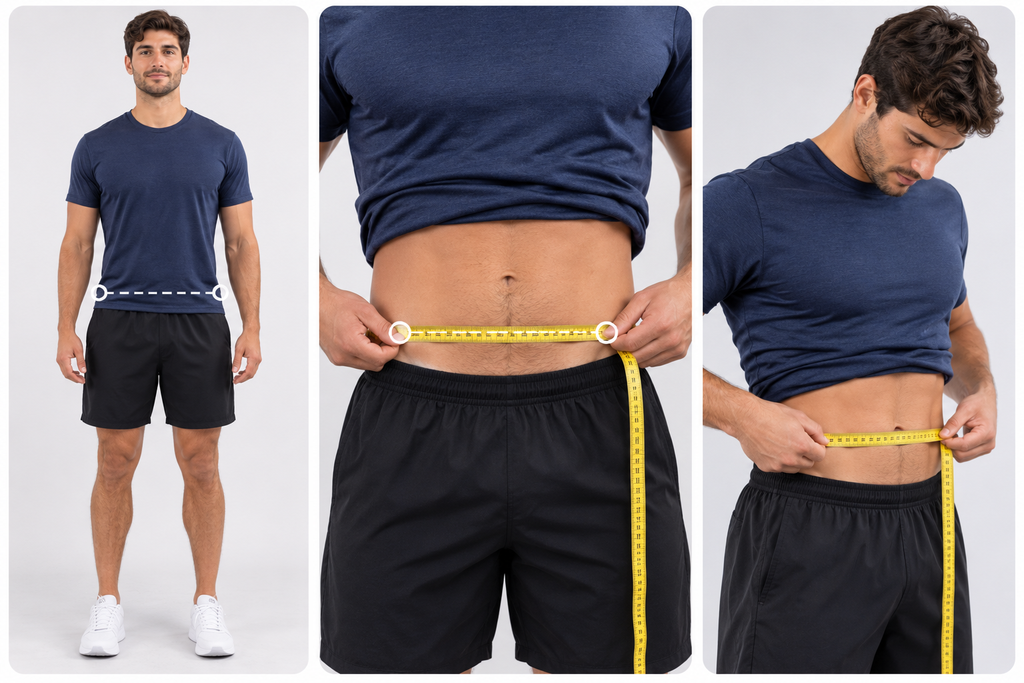
For men, the tape measure can matter more than the scale. Fat stored around the belly is linked with a higher risk of heart disease, high blood pressure and type 2 diabetes. The National Heart, Lung, and Blood Institute uses a waist size above 40 inches (102 cm) as a marker of higher risk in men.
How to measure it properly
- Stand up straight and find the top of your hip bones.
- Wrap a tape measure around your waist at that level, keeping it level and snug but not pressing into the skin.
- Breathe out normally, then measure.
Measure at the same time of day, once every two or three weeks.
Why it’s a better progress check for many men
If you start lifting weights while cutting back on food, the scale can move slowly because you’re keeping or gaining muscle. Your waist usually tells the truth faster. A shrinking waist with a steady scale is still real progress.
What to use
No program is needed for this part: a $5 tape measure is enough. If you like data, a smart scale adds body fat trends, but treat those numbers as estimates.
Weak spot 2: alcohol
Alcohol is one of the most underestimated sources of calories for men. Federal dietary guidance has estimated that alcoholic drinks make up about 5–7% of men’s calorie intake on average, and more among those who drink regularly. Drinks also tend to come with food: wings, pizza, late-night snacks.
What a typical drink adds
| Drink | Typical serving | About |
|---|---|---|
| Regular beer (5% alcohol) | 12 oz | 150 calories |
| Glass of wine (12% alcohol) | 5 oz | 120 calories |
| Spirits (40% alcohol), straight | 1.5 oz | 100 calories |
| Rum and cola | 7 oz | 190 calories |
Figures from the 2020–2025 Dietary Guidelines for Americans. Craft beers and larger pours can contain much more.
The weekend math
Four regular beers on Friday and four on Saturday add up to about 1,200 calories, before any food. Do that most weekends and it’s roughly 60,000 calories a year from beer alone. That doesn’t mean you have to stop drinking, but it’s often the single easiest place for men to make a big difference.
What the guidelines say now
The 2025–2030 Dietary Guidelines, released in January 2026, dropped the old “up to two drinks a day for men” limit and now simply advise drinking less for better overall health. The National Institute on Alcohol Abuse and Alcoholism still refers to the earlier limit of two drinks or fewer on any day for men. Either way, less is better for both your weight and your health.
Practical swaps that work
- Set a number before you start, such as two drinks, and alternate with water or sparkling water.
- Choose lighter options: light beer, a spirit with a zero-calorie mixer, or a smaller pour.
- Plan the food, too: eat a proper meal first so you’re not grazing on bar snacks.
- Log your drinks. Seeing them in an app is a reality check. WeightWatchers’ Points make drinks very visible, and trackers like Cronometer or MyFitnessPal show the calories.
If you find it hard to cut back, or drinking is affecting your health or relationships, talk to your doctor. The NIAAA’s free Rethinking Drinking site also has practical tools.
Weak spot 3: eating out and fast food
In a large CDC survey from 2013–2016, 37.9% of men ate fast food on any given day, slightly more than women. Among men who did, the most common meal was lunch (48.3%), which fits the pattern of quick work lunches and drive-throughs. More recent CDC data from 2021–2023 found that about a third of adults still ate fast food on a given day, getting about 12% of their total calories from it.
Restaurant and takeout meals tend to be larger and higher in calories, fat and sodium than meals cooked at home. If you eat out often, cutting a few hundred calories from each of those meals can matter more than anything you change at home.
An ordering playbook
- Build around protein and vegetables: grilled chicken, a burrito bowl with extra vegetables, a burger with a side salad instead of fries.
- Watch the extras: sauces, cheese, fries and sugary drinks often add more calories than the main dish.
- Size down once: a regular instead of a large, or one taco fewer.
- Check before you go: most chains publish nutrition information, and large food databases include thousands of chain menu items.
- Box half when the portion is huge, before you start eating.
Program fit for men who eat out a lot
- MyFitnessPal: the largest food database, with many restaurant and chain items, which makes logging meals out much easier.
- WeightWatchers: the app lets you look up Points for restaurant meals, and the Points system is easy to apply on the go.
- Prepared meals for work lunches: if lunch is your problem, delivered meals such as Factor’s lower-calorie options can replace the drive-through. See Factor vs CookUnity vs Trifecta.
Weak spot 4: strength and protein
Men are more likely than women to do strength training, but most still don’t do enough, and the gap widens with age. In CDC survey data from 2020, the share of men meeting the guideline for muscle-strengthening activity dropped sharply with age:
| Age | Men meeting the muscle-strengthening guideline (2020) |
|---|---|
| 18–44 | 44.5% |
| 45–64 | 29.9% |
| 65 and older | 22.0% |
Overall, only 28.3% of men met the guidelines for both aerobic and muscle-strengthening activity.
Why it matters during weight loss
When you eat less, your body can lose muscle as well as fat, especially if you don’t train. Muscle also declines gradually with age. Keeping it helps you stay strong, supports a healthy metabolism and makes the weight you lose more likely to be fat.
The minimum that makes a difference
The CDC recommends that adults do muscle-strengthening activities at least two days a week, working all major muscle groups, plus about 150 minutes of moderate aerobic activity a week, such as brisk walking. Two 30-minute full-body sessions are a realistic start: squats or leg presses, push-ups or presses, rows or pull-downs, and a carry or plank.
Protein
Protein helps preserve muscle and keeps you full. The official recommended daily amount for adults is 0.8 grams per kilogram of body weight, and some research suggests more may help preserve muscle during weight loss, especially for older adults. A practical approach: include a good source of protein, such as eggs, Greek yogurt, fish, chicken, beans or tofu, at every meal. If you have kidney disease or another condition, ask your doctor or a dietitian how much is right for you.
Protein Calculator
Protein helps you keep your muscle and stay full. The official minimum for adults is 0.8 g per kilogram of body weight, but research suggests more can help protect muscle while you lose weight, especially if you’re over 65. Find your daily target below.
Build your protein day
Ranges are based on the US Recommended Dietary Allowance (0.8 g/kg), the PROT-AGE expert recommendations for adults over 65 (1.0–1.2 g/kg, or 1.2+ g/kg if active), research on weight loss (about 1.2–1.6 g/kg) and the International Society of Sports Nutrition position for people who strength train (1.4–2.0 g/kg). Most people get the most benefit by spreading protein across meals and combining it with strength training. This calculator is for healthy adults and is not medical advice. If you have kidney or liver disease, diabetes, are pregnant or breastfeeding, talk to your doctor or a registered dietitian before increasing your protein intake.
Program fit for men who train
- MacroFactor: sets calorie and protein targets and adjusts them weekly based on your real weight trend, which is ideal when you’re lifting and the scale moves slowly. About $71.99 a year.
- Cronometer: free tracking with detailed protein and nutrient data, including a free barcode scanner.
Since I started lifting weights, I’ve also become more mindful of the amount of protein I consume. My routine involves strength training about 3–4 times a week, targeting different muscle groups such as the legs, glutes, back, arms, and core.
At first, I didn’t pay much attention to protein, but once I started tracking it, I realized how important it is for recovery and muscle growth. I try to include protein-rich foods in my meals, such as eggs, chicken, fish, yogurt, and legumes.
I’ve noticed that paying attention to my diet and staying consistent with my workouts helps me recover better and feel more energetic.
What research says actually works for men
For years, most weight loss programs were built and tested mainly with women. A 2012 review of randomized trials of lifestyle weight loss programs found that men made up only about 27% of participants. About a third of the trials included only women, while only 5% included only men. That matters, because men often respond to a different style.
The football study that changed thinking
The clearest example is Football Fans in Training (FFIT), a randomized controlled trial published in The Lancet in 2014. Researchers recruited 747 overweight men aged 35–65 through Scottish professional football clubs and ran a 12-week program at the stadiums, led by club coaches.
- At 12 months, men in the program had lost about 4.9 kg (around 11 pounds) more than men on the waiting list.
- 39% of men in the program kept off at least 5% of their body weight at 12 months, compared with 11% in the comparison group.
- A follow-up study found that the men still had a modest average weight loss of about 2.9 kg three and a half years later.
What made it work
The researchers designed FFIT specifically for men. The key ingredients are useful for choosing any program:
- A setting men already enjoy, rather than one that feels like a diet class.
- Groups of men with shared interests, which built camaraderie and accountability.
- Plain talk and practical, small changes to eating and drinking, not a strict diet.
- Step counting and gradually increasing activity, with real exercise sessions.
- Tracking progress with numbers, such as weight, waist and steps.
What this means for choosing a program
You probably can’t join a stadium program, but you can copy the ingredients: pick something with clear numbers to track, add a social or competitive element (a workshop group, a step challenge with friends, a gym partner), and focus on a few practical changes rather than an extreme plan.
The programs, matched to your weak spot
There’s no single “best” program for men. Pick the one that fixes your biggest problem, then add a second tool only if you need it.
| Your weak spot | Best fit | Why it fits | Typical price (US, Nov 2026) |
|---|---|---|---|
| Waist and general eating habits | WeightWatchers Core | One clear daily Points target; lean proteins and vegetables are ZeroPoint, so big appetites stay full | About $10–$12/mo on a 10–12-month plan |
| Alcohol and weekends | WeightWatchers Core | Drinks have Points, which makes their cost obvious, so you can plan ahead for nights out | About $10–$12/mo on an annual plan |
| Eating out | MyFitnessPal | The largest food database, including many restaurant items | Free; Premium $79.99/yr |
| Strength and body composition | MacroFactor | Calorie and protein targets that adjust weekly to your real results | $71.99/yr or $11.99/mo |
| Want it free | Cronometer | Free barcode scanning and detailed protein and nutrient data | Free; Gold $59.99/yr |
| Stress or late-night eating | Noom | Daily lessons on habits and triggers | About $209/yr or $70/mo |
| No time to cook | Nutrisystem for Men, or Factor | Portion-controlled meals delivered | Nutrisystem about $370–$425 per 4 weeks; Factor about $12.50–$15 per meal |
| Need motivation and company | A walking app with challenges, plus a group | Copies the social, competitive ingredient that worked in FFIT | Usually free |
A few things to know before you sign up
WeightWatchers: Core+ (about $20–$22 a month on an annual plan) adds live workshops and coaching. Worth it if you’ll actually attend; see our WeightWatchers review for the full cost breakdown.
Noom’s trial, explained: Noom often lets new users start with a short, low-cost trial, typically 7 to 14 days, where you may choose how much to pay. If you don’t cancel before it ends, it automatically turns into the plan you picked at sign-up, which can be $209 for a year charged upfront. Set a reminder if you’re only testing it.
MacroFactor: there’s no free plan, only a 7-day trial, and it works best if you log food and weigh yourself consistently.
Cronometer: the best choice if you don’t want to pay anything. Its free plan does almost everything most men need; Gold mainly removes ads and adds extras.
Meal delivery: convenient for busy weeks, but expensive long term. Use it to replace your hardest meals, usually lunch, rather than every meal. Compare options in our Nutrisystem vs Factor vs Optavia guide.
For more apps, see our best weight loss apps and best walking apps.
A 12-week starter plan for men
The FFIT program ran for 12 weeks, and that’s a good length to build habits that last. Here’s a simple plan that copies its approach: small changes, numbers you can track, and a gradual build-up.
| Weeks | Eating and drinking | Activity | Track |
|---|---|---|---|
| 1–2 | Log everything you eat and drink, without changing it yet. Find your two biggest calorie sources. | Check your average daily steps. Add a 10-minute walk on most days. | Weight, waist, average steps |
| 3–4 | Fix your biggest weak spot first: set a drink limit, or swap your usual takeout order. | Add about 1,000 steps a day. Start two short strength sessions a week. | Weekly average weight |
| 5–8 | Add protein to every meal. Plan your work lunches. | Build up to about 150 minutes of brisk walking a week, plus two strength sessions. | Waist every 2–3 weeks |
| 9–12 | Fix your second weak spot. Plan how you’ll handle weekends and events. | Keep your routine. Add weight or reps to strength exercises gradually. | Compare week 1 with week 12 |
What to expect: steady progress of about 1–2 pounds a week is a good pace, according to the CDC, and even a 5% loss can improve blood pressure and blood sugar. Some weeks the scale won’t move; look at your waist and your monthly trend instead.
Make it social: do it with a friend, join a step challenge, or try a program with group sessions. In the FFIT study, the group setting was one of the reasons men kept going.
Before you start: get the numbers that matter
Men are often less likely than women to see a doctor for routine check-ups. Before you change your diet and activity, a quick visit is worth it, especially if you’re over 40, haven’t exercised in a while, or have a family history of heart disease or diabetes. Ask for:
- Blood pressure
- Blood sugar (for example, an A1C test)
- Cholesterol
- Waist measurement and weight, to track alongside the numbers above
These give you health goals that matter more than the scale, and they often improve with modest weight loss.
Skip the shortcuts
Online ads aimed at men often promise fast fat loss through supplements. Be cautious with:
- “Fat burners” and “metabolism boosters”: there’s little good evidence they work, and some contain stimulants or hidden ingredients. The FDA has warned about weight loss products sold online that contain undeclared drugs.
- “Testosterone boosters”: over-the-counter products marketed this way are not a substitute for medical care. If you’re concerned about low energy or hormones, talk to your doctor and get tested.
- Very low-calorie crash diets: they make it harder to keep muscle and are rarely sustainable.
If you’re wondering whether medical treatment for weight is right for you, that’s a conversation to have with your doctor, who can look at your full health picture.
Quick answers
What’s the best weight loss program for men? It depends on your weak spot. WeightWatchers Core is the best all-round choice for most men who want structure; MacroFactor suits men who lift; Cronometer is the best free option; and meal delivery helps if you don’t have time to cook.
How can men lose belly fat? You can’t target fat in one spot, but overall weight loss, regular activity, strength training and cutting back on alcohol all help reduce waist size. Track your waist, not just the scale.
Does alcohol stop you losing weight? Not on its own, but it adds calories quickly: a 12-ounce regular beer has about 150. Cutting back is often one of the easiest changes for men.
Do men lose weight faster than women? Men often lose weight a little faster at first, partly because they tend to have more muscle. But a review of long-term trials that reported results separately for men and women found no significant difference in weight loss between the sexes. Sticking with your plan matters much more.
How much weight should I aim to lose? A gradual pace of about 1–2 pounds a week is more likely to last. A first goal of 5% of your body weight is realistic and can already improve your health.
How we put this guide together
We based this guide on data from U.S. government health agencies, peer-reviewed research on weight loss in men, and each program’s official pricing and features, checked in November 2026.
Sources
Government health agencies
- NHLBI: Assessing your weight and health risk (waist circumference)
- CDC/NCHS Data Brief 322: Fast food consumption among adults, 2013–2016
- CDC/NCHS Data Brief 533: Fast-food intake among adults, 2021–2023
- CDC/NCHS Data Brief 443: Physical activity among adults, 2020
- CDC MMWR QuickStats: Adults meeting the muscle-strengthening guideline, 2020
- CDC: Physical activity guidelines for adults
- CDC: Steps for losing weight
- Dietary Guidelines for Americans 2025–2030
- Dietary Guidelines for Americans 2020–2025 (calories in alcoholic drinks)
- NIAAA: Rethinking Drinking
- FDA: Tainted weight loss products
Research
- Hunt et al., The Lancet (2014): Football Fans in Training randomized controlled trial
- NIHR Evidence: Football program for overweight men achieves sustained weight loss (3.5-year follow-up)
- Pagoto et al., Obesity (2012): Male inclusion in lifestyle weight loss trials
- Robertson et al., ROMEO project (2016): Should weight loss programmes be designed differently for men?
Program pricing and features
- Weight Watchers: Plans and pricing
- Noom: How much does Noom cost in 2026
- Amy Food Journal: MacroFactor review (2026)
- Amy Food Journal: Cronometer review (2026)
- MyFitnessPal: Membership pricing tiers
About the author
Written by Alex Morgan: I evaluate programs by reviewing their features, pricing, flexibility, ease of use, and long-term sustainability. I also research customer feedback and available scientific evidence to compare their strengths and weaknesses. My goal is to provide clear, unbiased reviews that help readers understand their options and find programs that fit their individual needs, goals, and lifestyles.
This content is for informational purposes only and does not replace professional medical advice, diagnosis or treatment.
Pingback: How to Choose a Weight Loss Program: The Complete Guide (2026) – weightprogramguide.com