Last updated: 2 oct 2026
Health disclaimer: Fitness trackers are not medical devices and their estimates, including calories burned, are approximate. Talk to your doctor before starting a new exercise routine, especially if you have a heart condition or other health concerns.
Our top picks
The Fitbit Charge 6 is the best fitness tracker for weight loss for most people in 2026, because it’s affordable, easy to use and tracks steps, heart rate, sleep and workouts well. If you use an iPhone and want a full smartwatch, the Apple Watch is the best all-in-one choice.
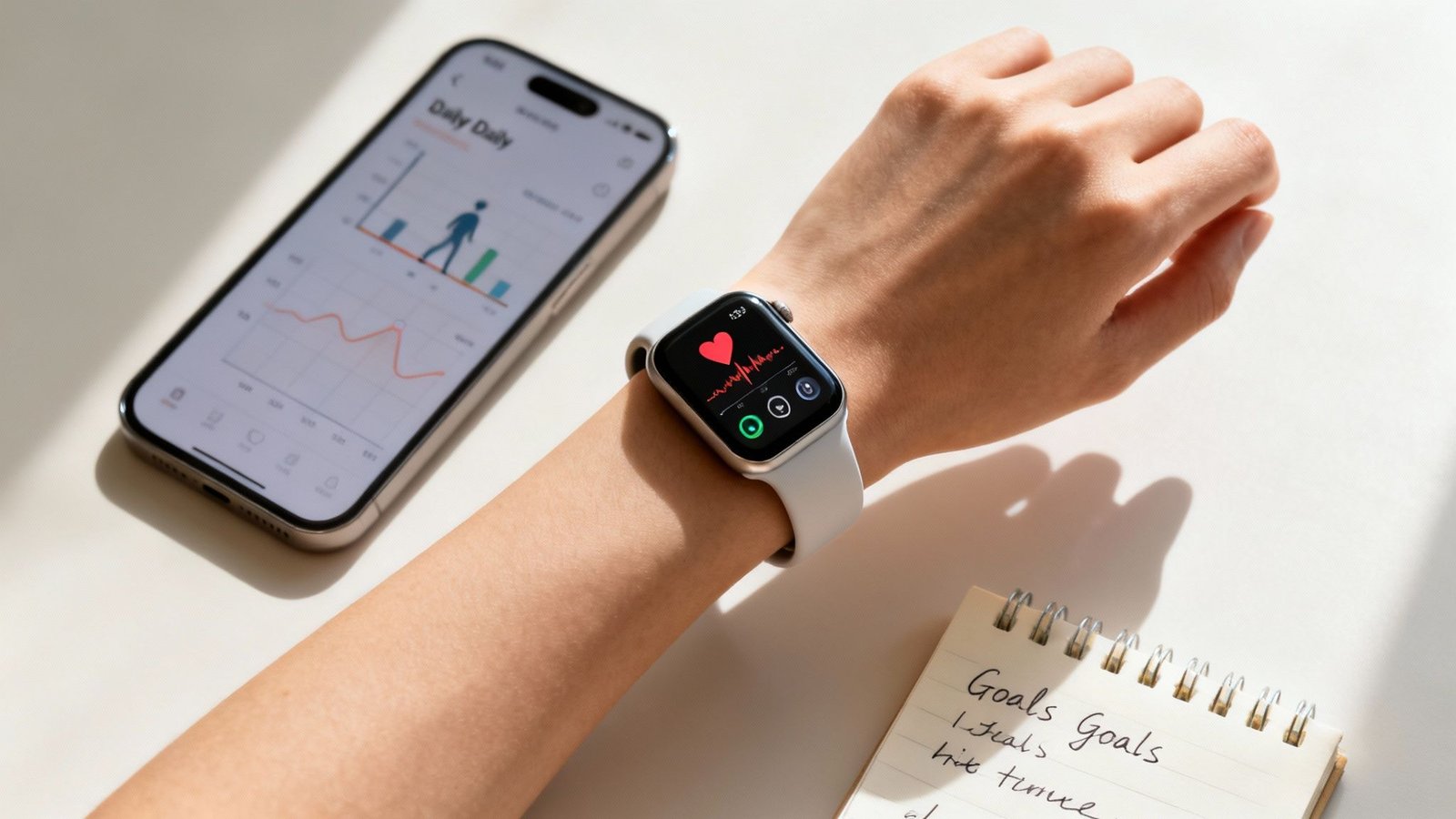
A fitness tracker won’t make you lose weight by itself, but it can help in two ways: it nudges you to move more every day, and it shows you patterns in sleep and activity that affect appetite and energy. The best tracker is the one comfortable enough to wear every day.
We compared six popular trackers using independent reviews, specs and current prices. Prices are typical US prices in late September 2026 and change often with sales.
- Best overall: Fitbit Charge 6
- Best for iPhone users: Apple Watch (SE 3 or Series 12)
- Best battery life, no subscription: Garmin Vivoactive 6
- Best budget pick: Amazfit Helio Strap
- Best for sleep: Oura Ring
- Best for serious training: Whoop 5.0
Fitness trackers compared
| Tracker | Type | Typical price (US, Sept 2026) | Subscription | Screen | Best for |
|---|---|---|---|---|---|
| Fitbit Charge 6 | Band | About $100–$160 | Optional (Fitbit Premium) | Yes | Most people |
| Apple Watch SE 3 / Series 12 | Smartwatch | About $249 (SE 3); about $399 (Series 12) | None required | Yes | iPhone users |
| Garmin Vivoactive 6 | Smartwatch | About $230–$300 | None | Yes | Long battery life |
| Amazfit Helio Strap | Screenless band | About $100 | None | No | Budget |
| Oura Ring | Smart ring | About $350–$400 | Membership about $5.99/mo | No | Sleep and recovery |
| Whoop 5.0 | Screenless band | Included with membership | Required: about $199–$359/yr | No | Serious training |
When comparing costs, add any subscription over two or three years. A cheaper device with a required membership can cost more over time than a pricier watch with no subscription.
The best fitness trackers for weight loss, reviewed
1. Fitbit Charge 6 — Best overall
Price: About $100–$160, and often on sale.
The Charge 6 is a slim, comfortable band that tracks steps, heart rate, sleep and workouts, with built-in GPS for walks and runs. Reviewers consistently rank it among the best trackers for beginners. It works with both iPhone and Android, and Fitbit Premium (about $10/month) is optional for deeper sleep and stress insights.
- Pros: Affordable; easy to use; good all-round tracking
- Cons: Some insights require a subscription; small screen
2. Apple Watch SE 3 or Series 12 — Best for iPhone users
Price: About $249 for the SE 3; about $399 for the Series 12.
The Apple Watch combines fitness tracking with full smartwatch features. Its Activity Rings make daily movement goals easy to follow, and it syncs everything to Apple Health, where many food and scale apps also connect. The SE 3 covers the essentials for most people; the Series models add extra health sensors.
- Pros: Excellent app integration; motivating activity goals; no subscription required
- Cons: iPhone only; battery usually lasts about a day or two
3. Garmin Vivoactive 6 — Best battery life, no subscription
Price: About $230–$300.
Garmin watches are known for accurate GPS, many workout modes and long battery life, and the Vivoactive 6 brings those strengths to a more affordable, everyday design. All of Garmin’s health insights are included without a subscription.
- Pros: Long battery life; strong workout tracking; no fees
- Cons: Smart features less polished than Apple’s
4. Amazfit Helio Strap — Best budget pick
Price: About $100.
The Helio Strap is a screenless band that tracks heart rate, sleep and activity with up to about 10 days of battery life. Reviewers found its heart rate tracking reliable, and it doesn’t require a subscription, making it a low-cost alternative to Whoop.
- Pros: Affordable; no subscription; long battery
- Cons: No screen; smaller app ecosystem
5. Oura Ring — Best for sleep
Price: About $350–$400, plus a membership of about $5.99/month.
Oura is a smart ring that focuses on sleep, readiness and daily activity. Many people find it easier to wear all day and night than a watch. Better sleep can support weight loss by helping regulate appetite and energy, so Oura suits people who want to work on rest as well as movement.
- Pros: Comfortable; excellent sleep insights; discreet
- Cons: Membership required for full features; less useful for workouts
6. Whoop 5.0 — Best for serious training
Price: The band comes with a required membership of about $199–$359 per year, depending on the tier.
Whoop focuses on strain, recovery and sleep, giving daily guidance on how hard to train. It’s popular with athletes and people who exercise intensely, but its cost and lack of a screen make it less practical for casual users.
- Pros: Detailed recovery and strain data; no screen distractions
- Cons: Expensive membership; no smartwatch features
How fitness trackers help with weight loss
Trackers work best as motivation and awareness tools. They help you notice how much you move, how well you sleep and how your habits change over time.
- More daily movement: Step counts and reminders encourage walking and breaking up long periods of sitting.
- Workout tracking: Logging walks, runs or strength sessions helps you stay consistent.
- Sleep insights: Short or poor sleep can increase hunger and cravings. Trackers can help you spot patterns.
- Trends over time: Seeing progress in steps or resting heart rate can keep you motivated when the scale moves slowly.
The CDC recommends that adults get about 150 minutes of moderate activity a week, such as brisk walking, plus muscle-strengthening activities at least two days a week. A tracker makes it easier to see whether you’re hitting those goals.
How accurate is «calories burned»?
Not very. Trackers are fairly good at counting steps and measuring heart rate, but their calorie burn figures are estimates and can be off by a wide margin. Avoid «eating back» every calorie your tracker says you burned, since that can stall progress. Use the number as a rough guide and focus on trends.
What to look for when buying
- Comfort: You’ll only benefit from a tracker you actually wear, including at night.
- Phone compatibility: Apple Watch works only with iPhone; most others work with both iPhone and Android.
- Subscriptions: Check whether key features require a monthly fee.
- Battery life: Longer battery means fewer gaps in your data.
- App connections: Make sure it syncs with your food tracker or smart scale, such as through Apple Health or Google Health Connect.
Pairing a tracker with a smart scale and a food app gives you the most complete picture of your progress.
How we chose these trackers
We compared published specs, current prices and results from independent reviewers who tested accuracy, comfort and battery life. We weighed ease of use, activity and sleep tracking, app quality, subscription costs and total cost over time. We update this page when new models launch or prices change.
Frequently asked questions
What is the best fitness tracker for weight loss?
For most people, the Fitbit Charge 6 offers the best balance of price, comfort and features. iPhone users who want a full smartwatch may prefer an Apple Watch.
Do fitness trackers help you lose weight?
They can help by encouraging more daily movement and showing your activity and sleep patterns. Weight loss still depends mostly on eating habits, activity and consistency over time.
Are fitness trackers accurate for calories burned?
Not precisely. Step counts and heart rate are usually reasonable, but calorie burn estimates can be well off. Use them as a rough guide rather than an exact number.
Do I need a subscription for a fitness tracker?
It depends on the device. Apple Watch, Garmin and Amazfit don’t require one. Fitbit Premium is optional, while Oura and Whoop need a membership for full features.
How many steps a day should I aim for to lose weight?
There’s no single number for everyone. Gradually increasing your daily steps and aiming for about 150 minutes of moderate activity a week, as the CDC recommends, is a good starting point. Ask your doctor what’s right for you.
This content is for informational purposes only and does not replace professional medical advice.